Short-Term vs. Long-Term Rentals in Park City: Which Investment Strategy Is Right for You?
Park City has long been recognized as one of Utah's premier destinations for outdoor recreation, luxury living, and year-round tourism. From world-class ski resorts and championship golf courses to award-winning restaurants and vibrant community events, it's no surprise that investors continue to see tremendous opportunity in Park City rental properties.
If you're considering purchasing an investment property, one of the first decisions you'll face is whether to operate it as a short-term vacation rental or a long-term rental property.
Each strategy offers unique benefits, risks, income potential, and management requirements. The right choice depends on your financial goals, lifestyle, and investment timeline.
In this guide, we'll compare both options so you can make an informed investment decision.

Why Park City Is a Strong Rental Market
Park City's popularity extends far beyond ski season.
The area attracts visitors and new residents throughout the year because of its:
World-renowned ski resorts
Mountain biking and hiking trails
Golf communities
Festivals and sporting events
Luxury lifestyle
Strong local economy
This year-round demand helps create opportunities for both vacation rental owners and long-term investors.

Additionally, Park City continues attracting:
Remote workers
Retirees
Second-home buyers
Corporate relocations
Luxury home buyers
These trends contribute to continued demand across multiple segments of the housing market.
What Is a Short-Term Rental?
A short-term rental is typically rented for fewer than 30 consecutive days.
Examples include:
Vacation homes
Ski condos
Weekend getaways
Luxury cabins
Seasonal accommodations
Many owners advertise their homes on vacation rental platforms or through local property management companies.
Benefits of Short-Term Rentals
Higher Income Potential
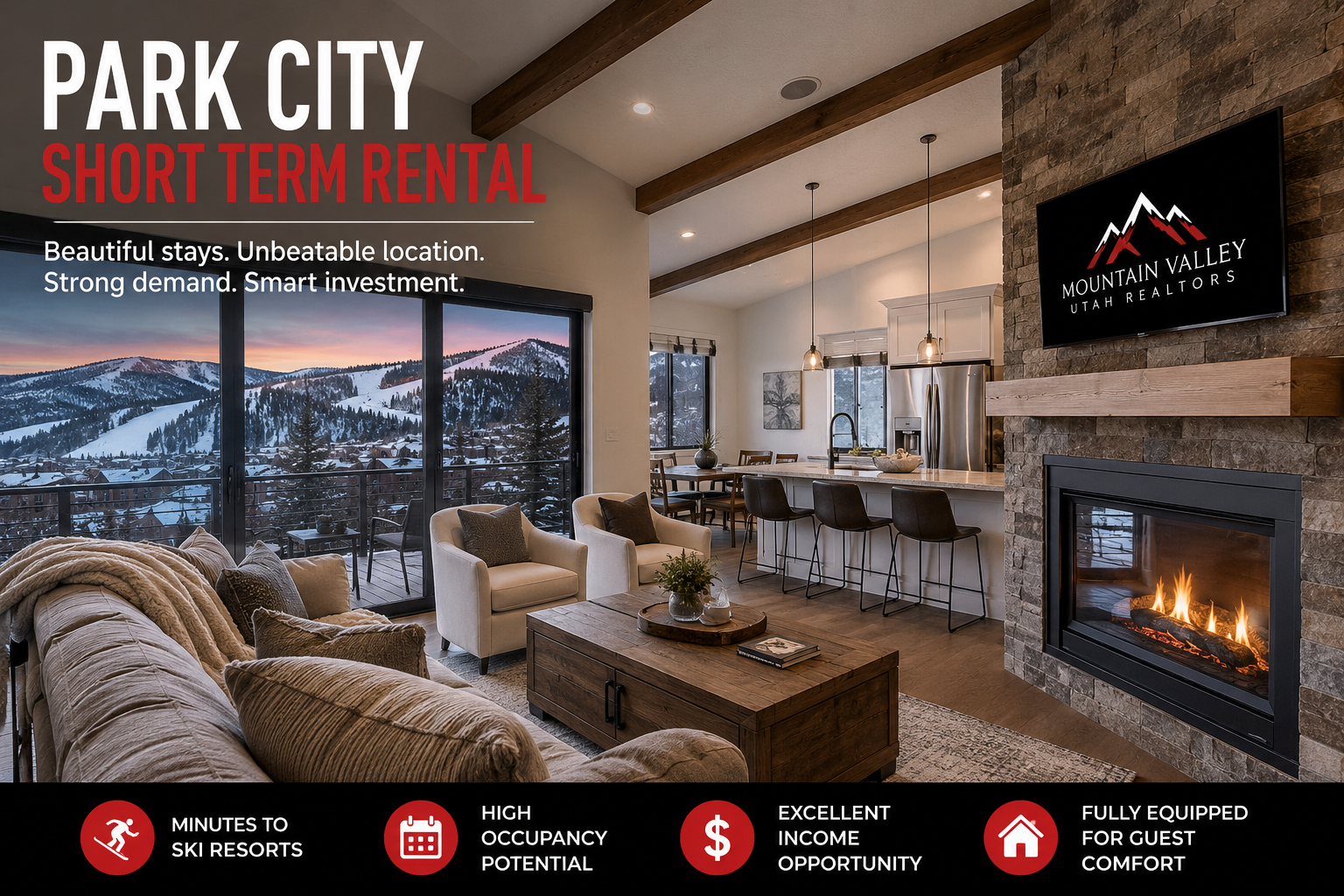
One of the biggest reasons investors choose short-term rentals is the possibility of generating higher nightly rates.
During peak tourism seasons, well-located properties may command premium pricing.
Factors that influence income include:
Property location
Home size
Amenities
Views
Proximity to ski resorts
Seasonal demand
For investors who maximize occupancy, annual revenue can exceed that of comparable long-term rentals.
Personal Use Flexibility
Many investors purchase second homes they intend to enjoy personally.
Short-term rentals allow owners to:
Use the property for vacations
Generate income when not occupied
Maintain flexibility throughout the year
This dual-purpose ownership appeals to many buyers.
Strong Tourism Market
Park City attracts visitors in every season.
Popular activities include:
Winter
Skiing
Snowboarding
Snowshoeing
Summer
Hiking
Mountain biking
Golf
Outdoor concerts
Year-Round
Shopping
Dining
Festivals
Weddings
Conferences
This diversified tourism base helps support rental demand throughout the year.
Challenges of Short-Term Rentals
While income potential is attractive, vacation rentals also require greater involvement.
More Active Management
Owners often manage:
Guest communication
Cleaning schedules
Maintenance
Bookings
Pricing adjustments
Marketing
Many investors hire professional property managers, which reduces workload but increases operating expenses.
Seasonal Revenue Fluctuations
Occupancy often varies depending on:
Snow conditions
Tourism demand
Economic trends
Travel patterns
Investors should budget for slower periods throughout the year.
Local Regulations
Perhaps the most important consideration involves local rental regulations.
Different neighborhoods may have varying requirements related to:
Licensing
Zoning
Occupancy limits
HOA rules
Permit requirements
Before purchasing, investors should fully understand applicable regulations.
A knowledgeable Mountain Valley Utah Realtor with local Park City expertise can help identify communities that align with your investment goals.
What Is a Long-Term Rental?
Long-term rentals generally involve leases lasting six months or longer.
Typical tenants include:
Local professionals
Families
Healthcare workers
Teachers
Remote employees
This strategy prioritizes consistent occupancy and predictable monthly income.
Benefits of Long-Term Rentals
Stable Cash Flow
One of the greatest advantages is predictable monthly income.
Long-term tenants typically provide:
Consistent rent payments
Lower vacancy rates
Reduced marketing expenses
Many investors appreciate the financial stability this offers.
Less Management
Compared to vacation rentals, long-term properties require significantly less day-to-day involvement.
There are:
Fewer tenant turnovers
Less frequent cleaning
Reduced guest communication
Simpler scheduling
This makes long-term rentals attractive for investors seeking passive income.
Lower Operating Costs
Long-term rentals often have fewer recurring expenses.
Owners may spend less on:
Furnishings
Utilities
Cleaning services
Marketing
Property management
Over time, these savings can improve profitability.
Challenges of Long-Term Rentals
Like every investment strategy, long-term rentals also have drawbacks.
Lower Monthly Revenue Potential
Although income is more predictable, monthly rent may be lower than what a successful vacation rental could generate during peak seasons.
Less Flexibility
Once a tenant signs a lease, owners generally cannot use the property for personal vacations until the lease expires.
Tenant Risks
Long-term ownership occasionally involves:
Late payments
Property damage
Vacancy periods
Lease disputes
Careful tenant screening helps minimize these risks.
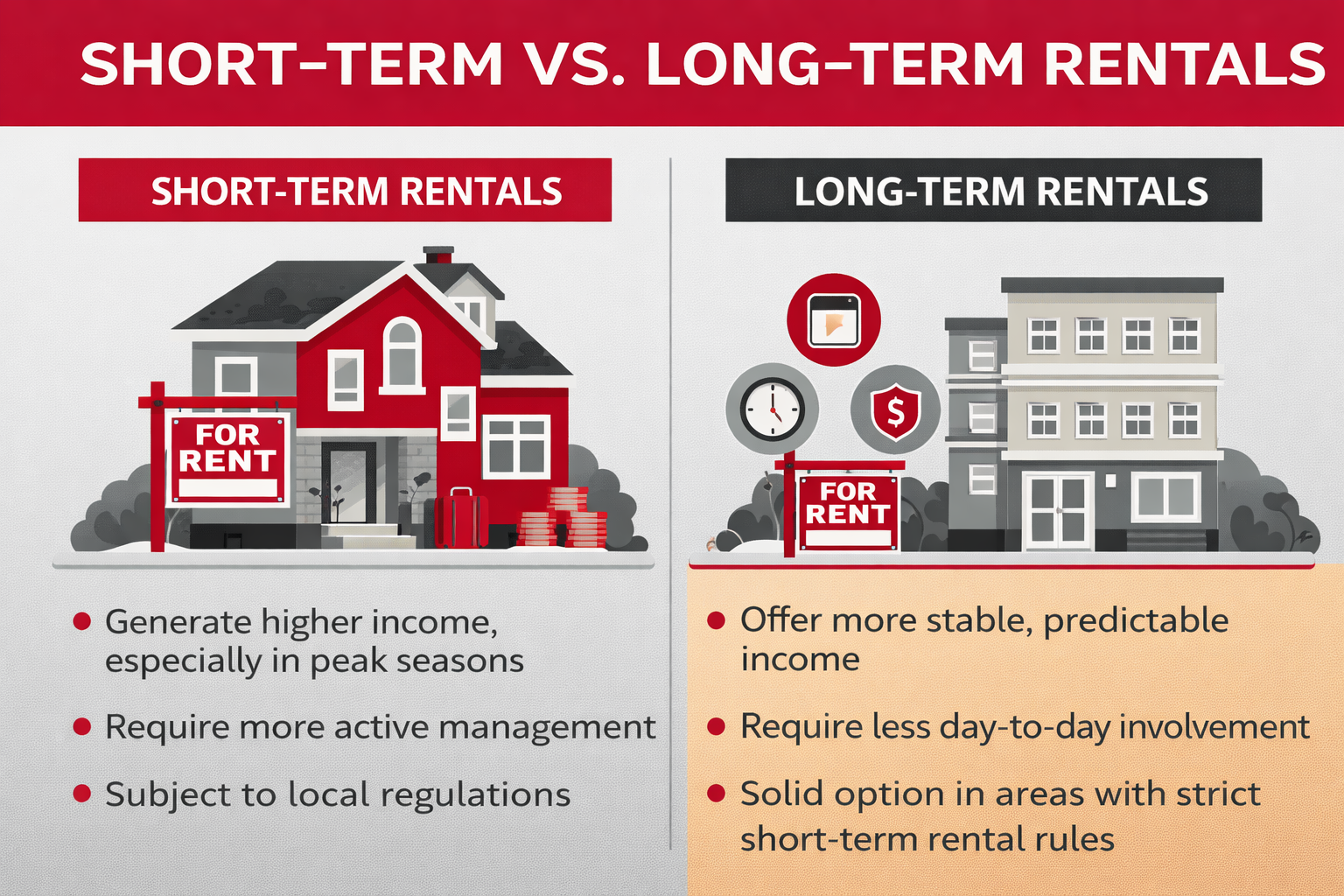
Which Investment Strategy Produces Better Returns?
There is no universal answer.
The better strategy depends on:
Purchase price
Financing costs
Desired cash flow
Appreciation goals
Personal involvement
Property location
For example:
Short-Term Rentals May Be Best For:
Luxury condos
Ski-in/ski-out homes
Vacation properties
Investors comfortable with active management
Long-Term Rentals May Be Best For:
Families seeking passive income
Buy-and-hold investors
First-time real estate investors
Professionals relocating later
Important Questions to Ask Before Investing
Before purchasing Park City rental properties, ask yourself:
What annual return am I seeking?
Do I want passive income or maximum income?
Will I use the property personally?
Am I comfortable managing guests?
Should I hire professional property management?
What regulations apply to this neighborhood?
Answering these questions will help narrow your investment strategy.
Why Working With a Local Park City Realtor Matters
Investment real estate requires specialized knowledge.
A local Park City Realtor can help you evaluate:
Neighborhood appreciation trends
Rental demand
Comparable property performance
HOA restrictions
Short-term rental regulations
Future development plans
This information is difficult to obtain from online listings alone.
Why Investors Choose Mountain Valley Utah Realtors
At Mountain Valley Utah Realtors, we understand that every investor has different goals.
Whether you're purchasing your first rental property or expanding an established portfolio, we help clients:
Identify high-potential investment opportunities
Compare neighborhoods
Evaluate rental potential
Understand local regulations
Analyze market trends
Make informed purchasing decisions
Our goal is to help you build long-term wealth through smart real estate investments.
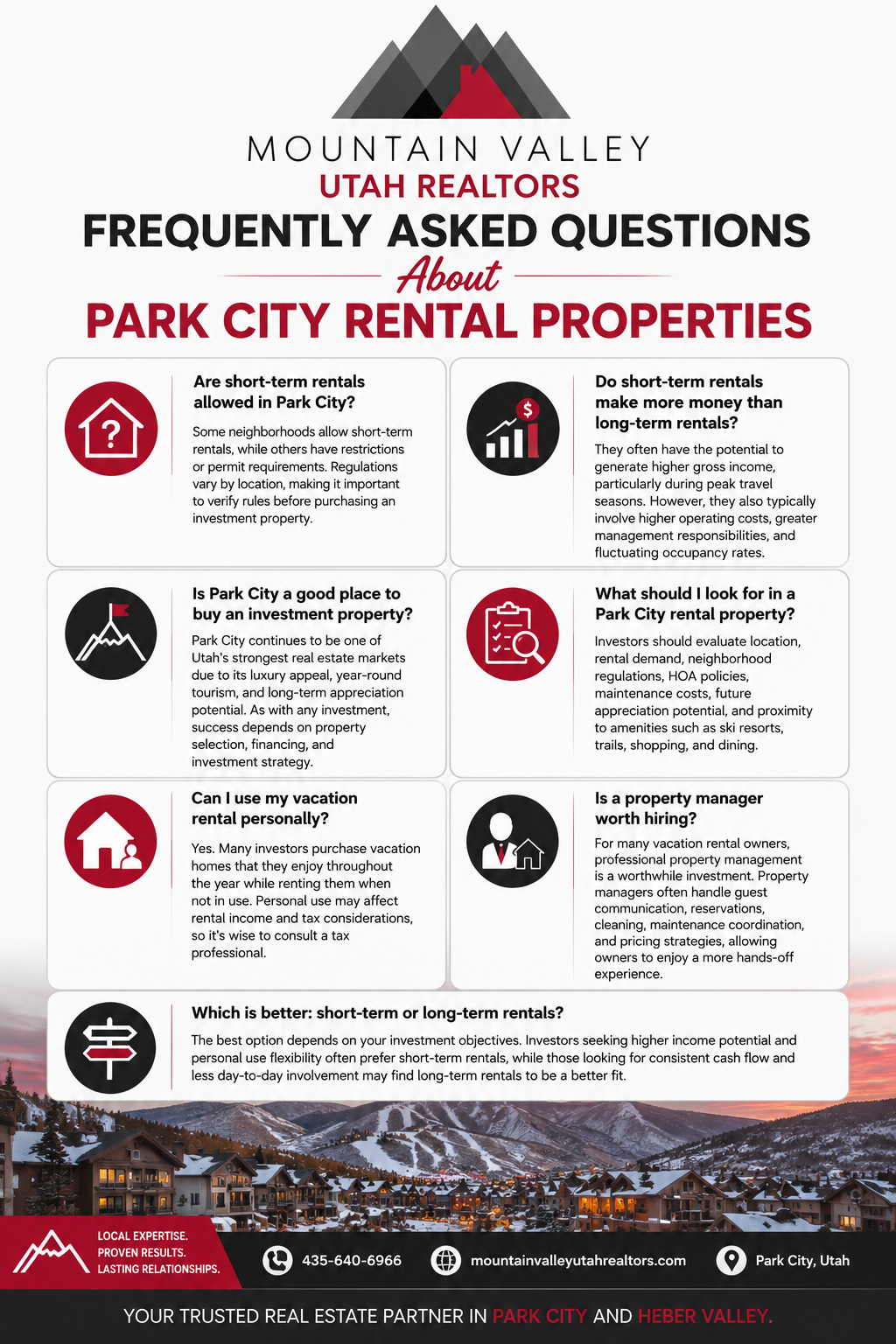
Frequently Asked Questions About Park City Rental Properties
Are short-term rentals allowed in Park City?
Some neighborhoods allow short-term rentals, while others have restrictions or permit requirements. Regulations vary by location, making it important to verify rules before purchasing an investment property.
Do short-term rentals make more money than long-term rentals?
They often have the potential to generate higher gross income, particularly during peak travel seasons. However, they also typically involve higher operating costs, greater management responsibilities, and fluctuating occupancy rates.
Is Park City a good place to buy an investment property?
Park City continues to be one of Utah's strongest real estate markets due to its luxury appeal, year-round tourism, and long-term appreciation potential. As with any investment, success depends on property selection, financing, and investment strategy.
What should I look for in a Park City rental property?
Investors should evaluate location, rental demand, neighborhood regulations, HOA policies, maintenance costs, future appreciation potential, and proximity to amenities such as ski resorts, trails, shopping, and dining.
Can I use my vacation rental personally?
Yes. Many investors purchase vacation homes that they enjoy throughout the year while renting them when not in use. Personal use may affect rental income and tax considerations, so it's wise to consult a tax professional.
Is a property manager worth hiring?
For many vacation rental owners, professional property management is a worthwhile investment. Property managers often handle guest communication, reservations, cleaning, maintenance coordination, and pricing strategies, allowing owners to enjoy a more hands-off experience.
Which is better: short-term or long-term rentals?
The best option depends on your investment objectives. Investors seeking higher income potential and personal use flexibility often prefer short-term rentals, while those looking for consistent cash flow and less day-to-day involvement may find long-term rentals to be a better fit.
Start Building Your Park City Real Estate Investment Portfolio
Whether you're interested in a luxury vacation home, a long-term rental property, or your first investment purchase, choosing the right property is the foundation of long-term success.
Mountain Valley Utah Realtors specializes in helping buyers evaluate investment opportunities throughout Park City and the surrounding communities.
Our local expertise, market knowledge, and personalized guidance can help you confidently navigate today's real estate market.
Contact Mountain Valley Utah Realtors today to explore available Park City rental properties and discover the investment strategy that's right for you.